

No products in the cart.
How to Choose the Right Materials for Your Renovation
If you asked me what I think about choosing materials for a home renovation, I’d say it’s one of the most exciting parts of the project. I might be biased, but I believe it’s through flooring, finishes, and materials that a renovation truly begins to come to life.
But the painful truth is that most people, without realizing it, end up choosing materials based on appearance alone.
Let’s be clear about one thing: beyond looking beautiful, materials need to be functional, durable, and suited to the family’s routine. When material choices are made without direction, the chances of rework and extra costs can increase significantly.
If you’re planning to renovate your home, here are the most important points to consider before deciding which materials to use.
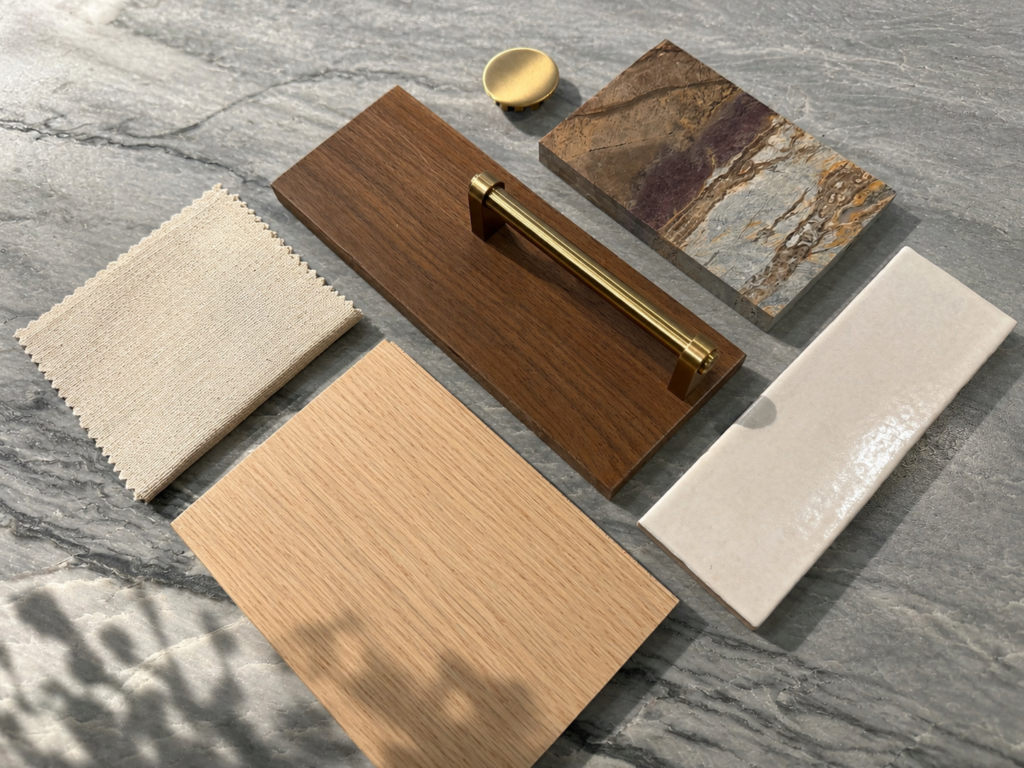
Why does material choice matter?
Every material has its own strengths, limitations, and maintenance requirements.
In practice, this means a material can be perfect for one space and completely unsuitable for another. Similarly, a choice that seems more affordable at first can lead to higher costs down the road due to maintenance or replacement.
That’s exactly why, in my design projects, material selection is part of my strategic planning. My goal is to find the right balance between aesthetics, functionality, and durability—creating spaces that aren’t just visually beautiful, but that offer comfort and meet the needs of the people who live there for years to come.
5 Essential steps for choosing the right materials
1. The design should come before choosing materials
Imagine preparing a special dish by choosing the ingredients before even reading the recipe.
You buy everything that looks beautiful and delicious, and only later discover that some ingredients don’t go together or worse, aren’t even part of the recipe.
Something very similar happens with a renovation.
It’s very common to see people who have just started their renovation visiting stores, saving inspiration photos, and deciding what the flooring, finishes, and materials will be.
And that’s completely natural. These references help you understand the style you like and serve as a starting point for the project.
But there’s one important detail: material selection should only happen once the design is fully defined.
That’s because decisions like the layout of the spaces, the lighting plan, the cabinetry, and even the electrical and plumbing systems directly influence which materials make the most sense for each space.
2. Consider your family’s routine
Another point worth paying attention to is the lifestyle of the people who will live in the home. After all, a material that works perfectly for one family may not be the best choice for another.
Before making any decisions, it’s worth thinking about how the spaces will be used on a daily basis. A few questions can help:
- Are there young children or pets in the home?
- Will the kitchen be used frequently?
- Do the homeowners often host friends and family?
- Is there a need for materials that are easier to clean and maintain?
- Does the family’s routine allow for materials that require frequent upkeep?
The answers to these questions directly shape material choices. More than simply following a trend, the goal is for every decision to contribute to a home that’s practical, comfortable, and built around the way the family actually lives.
3. Consider Where and How the Materials Will Be Used
Not every material performs the same way in every space. A finish that works beautifully in a formal living room may not be the best choice for a busy family kitchen or a primary bathroom.
That’s why I always consider how each space will be used before selecting materials. Some of the questions I ask include:
- Will this surface be exposed to moisture or frequent spills?
- Will it receive heavy daily use?
- How much maintenance will it require over time?
- Will it continue to look beautiful as it ages?
- Is it appropriate for the home’s climate and environment?
The best material selections balance beauty with performance. When materials are chosen with both aesthetics and everyday living in mind, the result is a home that’s not only beautiful on day one, but continues to function well for years to come.
4. Think about durability and ease of maintenance
I know that when choosing materials for a renovation, it’s easy to fall in love with how something looks. After all, we all want a beautiful home. But the truth is, the most beautiful finish isn’t always the most suitable for your routine.
That’s why, before making a decision, it’s worth evaluating a few important factors, such as:
- Resistance to wear;
- Ease of cleaning;
- Maintenance requirements;
- Lifespan of the material;
- Behavior when exposed to humidity and temperature changes.
Beyond reducing maintenance costs over time, this ensures spaces that stay beautiful, functional, and durable for many years to come.
5. Look for harmony across all rooms
Last but not least: aim to create spaces that speak to one another;
I like to remind my clients that a home shouldn’t feel like a collection of disconnected rooms. I’m not saying every space needs to look the same. It’s quite the opposite: each space can have its own personality, as long as there’s a connection between them.
When choosing materials, try to maintain a consistent language across elements such as:
- Color palette;
- Types of finishes;
- Textures;
- Metals and hardware;
- Wood and trim.
The result? This continuity creates a sense of balance, sophistication, and added value—making the home feel like a cohesive, harmonious whole.
Conclusion
Choosing materials is about much more than selecting finishes you like. Every decision influences how your home looks, functions, and ages over time.
When material selections are made as part of a thoughtful design process, the result is a home that feels cohesive, timeless, and built around the way you live.
If you’re planning a renovation and would like guidance before making these decisions, I’d be happy to help.

Leave a Reply