

No products in the cart.
We need to talk about the importance of smart storage.
If you’ve read any of my articles, you may have noticed that this topic comes up often. And that’s not by chance.
The more projects I design, the more I realize that one of the greatest differentiators of a beautiful home lies in how it’s organized.
That’s why today I want to share what smart storage is, why it makes such a difference in a residential project and offer some tips on how to incorporate it practically in your home.
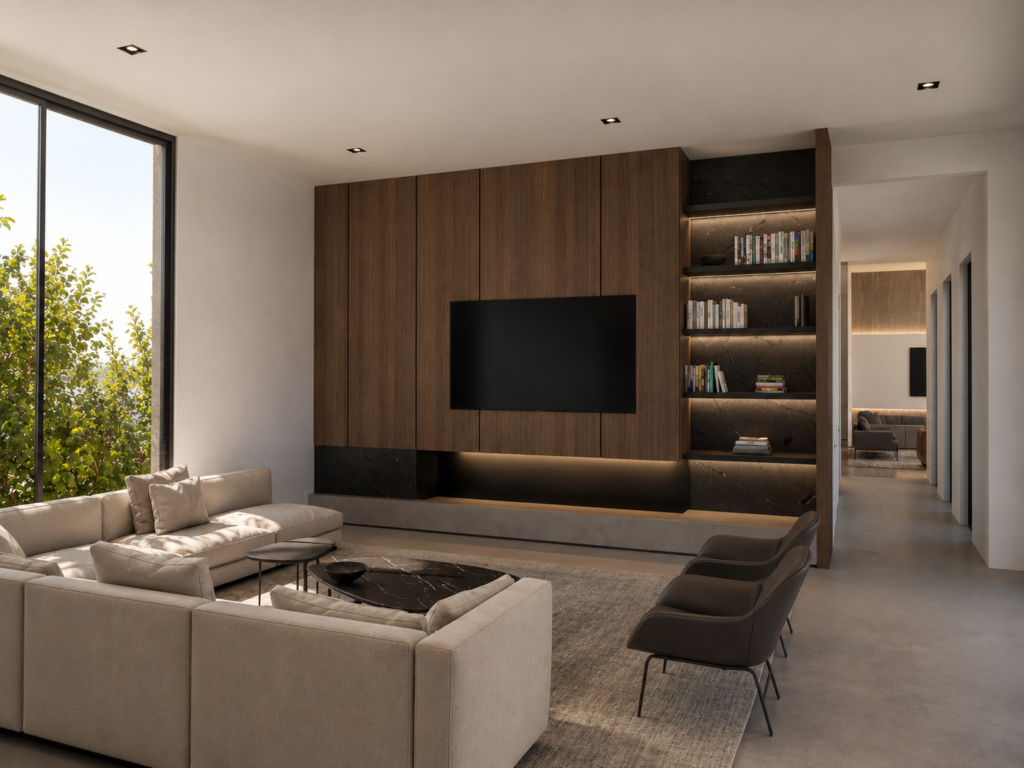
But what exactly is smart storage?
A lot of people believe that smart storage simply means having more cabinets or more space to put things away. But in my view, it goes far beyond that.
If someone asked me to define it, I’d say it’s the ability to design a home where organization, functionality and aesthetics work together.
That’s because a home with an excess of cabinets can also feel heavy and dysfunctional. The goal isn’t to add cabinets everywhere, but to make thoughtful use of the available space.
That’s why, from the very first stages of the project, I like to plan where each item will be stored, how it will be accessed on a daily basis and how these solutions can be incorporated without compromising circulation, the lightness of the spaces or the home’s identity.
Why does this matter?
If there’s one thing I’ve learned over the years of developing projects, it’s that a beautiful home doesn’t stay beautiful for long if it isn’t functional.
Imagine a home where storage was never planned. Over time, it’s natural for objects to start taking over countertops, tables, chairs and even circulation areas. Little by little, that sense of organization gives way to clutter, and spaces that once felt open start to feel overwhelming,
That’s precisely why smart storage makes such a difference. When every object has a designated place, staying organized happens much more naturally. As a result, spaces remain visually clean, circulation flows better and everyday life becomes lighter.
5 ways to incorporate smart storage in your home
1. Smart storage starts before construction begins
The first thing I usually explain to my clients is that smart storage shouldn’t be an afterthought once the home is already built. It needs to be part of the project from the very beginning.
Before designing the millwork or finalizing the furniture layout, I like to understand how the family lives. What does the daily routine look like? Which items need to be within easy reach? Is there a home office? Are there children or pets? Does the family entertain often?
These answers make all the difference, because a good project shouldn’t force you to adapt your routine to the spaces. The home needs to be designed to meet your needs and fit the way you live.
2. Make use of strategic spaces
This is one of the stages where I most enjoy getting creative.
One of the things I love most about a well-planned project is finding opportunities where most people see only “useless” spaces.
Areas under stairs, hallways, laundry rooms and even small corners of the home can be turned into smart storage solutions, without compromising the aesthetics or the flow of the spaces.
With good planning and a bit of creativity, it’s possible to make the most of every inch while keeping the home organized and visually light.
3. Avoid creating too many cabinets
A very common mistake is thinking that more cabinets always means better. In practice, that’s not always the case.
Smart storage isn’t about having more cabinets—it’s about having the right cabinets in the right places. When there’s balance, spaces remain light, organized and much more pleasant to live in.
4. Custom millwork can be a great asset
If there’s one investment I consider essential in a good residential project, it’s custom millwork.
And I’m not saying that just for aesthetic reasons. To me, well-developed millwork has the ability to completely transform the way a home functions.
The best custom millwork doesn’t draw attention to itself. It simply makes the home easier to live in. Everything seems to be exactly where it should be, with no excess, no improvisation and without the storage drawing more attention than the spaces themselves.
5. Think about the home you’ll have a few years from now
A family’s needs change over time, and I believe a good project needs to keep up with that evolution.
That’s why, I always try to design homes that make sense not just for today’s routine, but also for the way my clients will live a few years from now.
After all, a well-planned home is one that continues to meet the residents’ needs even as life changes.
To close this article, I’d like to reinforce that the true luxury of a home lies in its functionality.
After so many years developing residential projects, I can say that an organized, comfortable and functional home rarely happens by chance.
It’s the result of careful choices made during the planning stage.
Smart storage isn’t about creating more places to put things. It’s about designing a home that supports the way you live—today and for years to come.
If you’re planning a renovation or a new home and want every space to be thoughtfully designed around your daily routine, I’d be happy to help. Together, we can create a home that’s beautiful, functional, and organized from the very beginning.

Leave a Reply